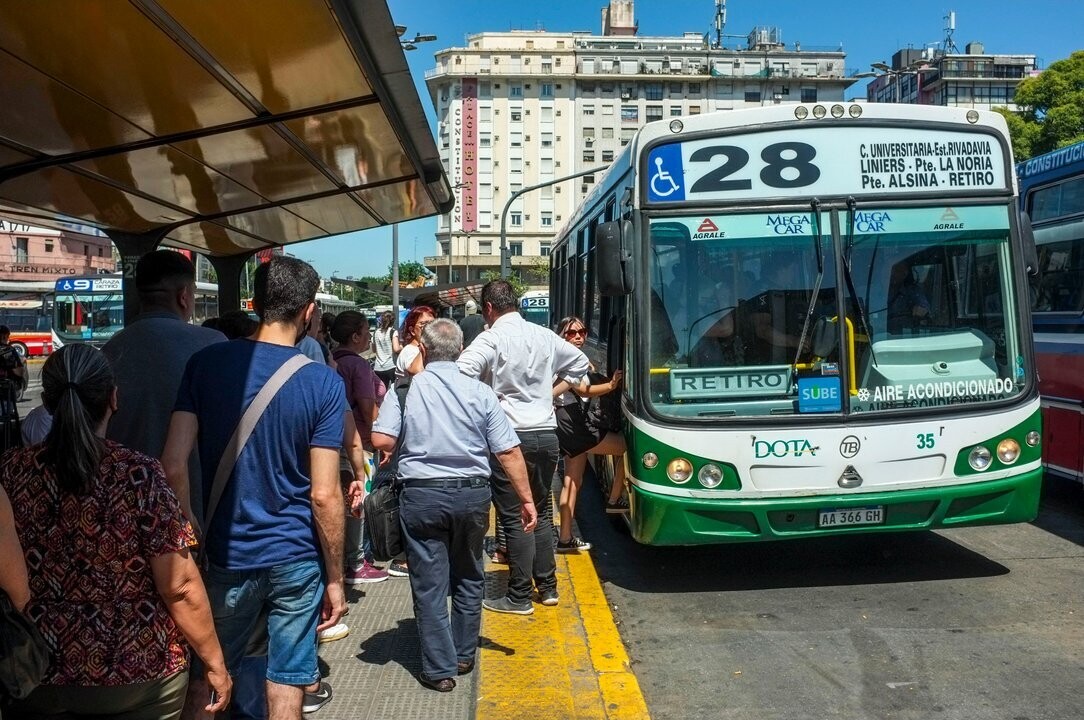
Historically, the subsidy system in Argentina emerged after the 2001 crisis to mitigate the impact of devaluation on public transport. However, its expansion under successive governments has created dependencies: companies receive compensation for the difference between operational costs and regulated fares, but without strict controls, abuses are fostered. The central conflict lies in the irregular distribution of subsidies for some 30 billion pesos, where companies like La Nueva Metropol and Grupo DOTA are engaged in a 'war' for control of state funds, manipulations in the SUBE system, and competitive advantages in the bus market of the Buenos Aires Metropolitan Area (AMBA). The starting point was a complaint filed by four of the five business chambers of the sector at the end of December 2025, which accused La Nueva Metropol of defrauding the state by altering data in the SUBE card system. According to the allegations, the company, owned by the Zbikoski brothers, would have exchanged tickets for long-distance trips for short ones to inflate the compensation received, causing an estimated fiscal damage of 30 billion pesos in the last year. This maneuver, known in the sector as 'subsidy fraud', allowed Metropol to capture disproportionate funds compared to its competitors, exacerbating tensions in an already concentrated market. Pierrini, appointed in May 2025 with the backing of key government figures such as Minister Luis 'Toto' Caputo, resigned on January 22, 2026, officially for personal reasons, but internal sources indicate he was forced from Davos, Switzerland, during the World Economic Forum. His departure came after the leak of the complaint to the media, which led to an internal purge: the removal of undersecretaries and delegates in Trenes Argentinos, and the appointment of Fernando Herrmann as interim replacement. The Secretariat, responsible for overseeing subsidies for more than 1.036 trillion pesos in 2026, now faces a criminal lawsuit for omission in the control of these funds, with Pierrini and Caputo at the center of the accusations. At the core of this 'dark battle' is the confrontation between La Nueva Metropol and Grupo DOTA, two transport giants that control a significant portion of the bus lines in the AMBA. Metropol dismissed the complaints as a 'vendetta' orchestrated by rivals, arguing that the accusations are related to its plan to import 150 electric buses from the Chinese brand King Long. This project, partially funded by additional government payments for eco-friendly fleets, represents a direct threat to DOTA, which holds the exclusive license for the local production of Agrale engines and defends national production against imports it considers unfair competition. Sector sources indicate that this dispute over subsidies is not new: DOTA has been accused in the past of falsifying diesel consumption, capturing more than 30 million dollars between 2022 and 2024 without sanctions from the National Transportation Regulation Commission (CNRT). The ongoing investigation, driven by administrative and criminal complaints, reveals a pattern of irregularities in the subsidy system. The SUBE mechanism, designed to compensate for low fares with state funds, has been vulnerable to manipulation: companies report kilometers traveled and passengers transported, but without rigorous audits, diversions are facilitated. Analysts point out that this negligence may be linked to political pressures or economic interests, in a context where subsidies are a key tool to keep fares accessible amid inflation. The total amount of transport subsidies in 2025 exceeded 800 billion pesos, with the AMBA absorbing the largest part, which turns this sector into a potential focus of corruption. The current case recalls previous scandals, such as the 'fake subsidies' in railways during the 2010s, which led to trials and partial reforms.